Canada-UAE trade and investment agreements: what they mean for Canadian business
 Caleesis TeleshFounder & Principal Lawyer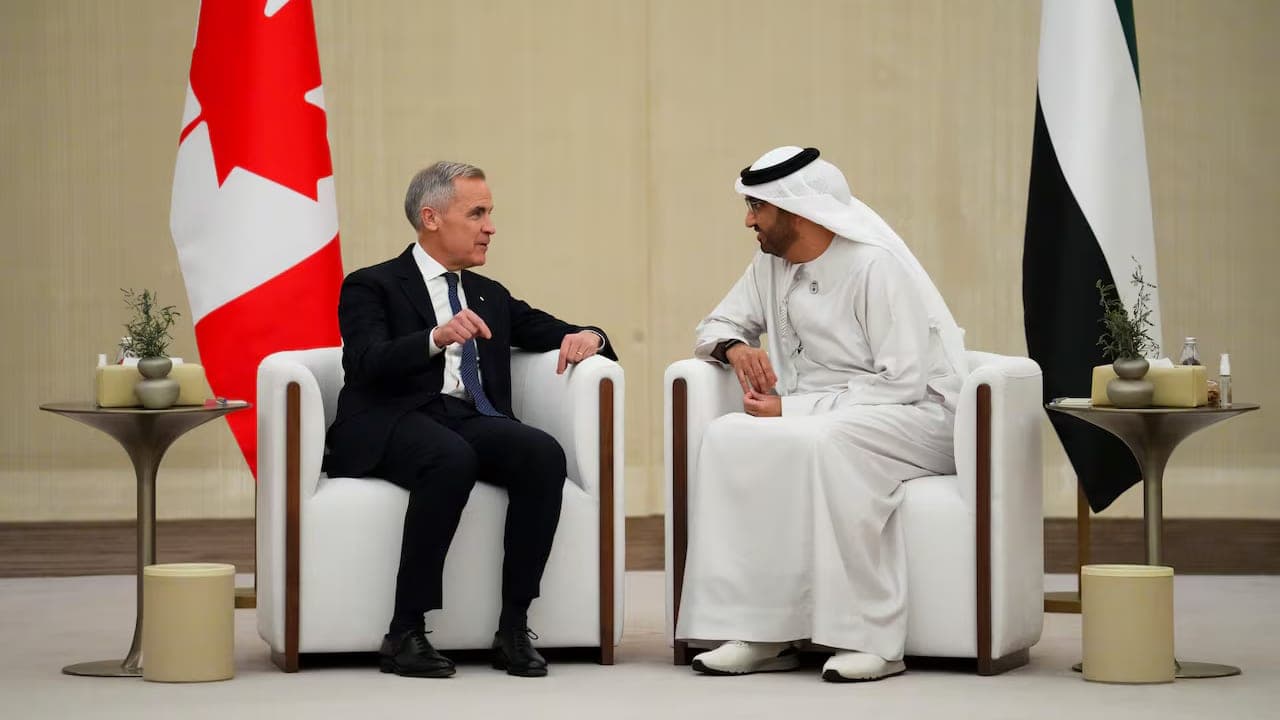
Prime Minister Mark Carney’s visit to Abu Dhabi in November 2025 produced three things that matter to Canadian business: a signed investment protection agreement with the United Arab Emirates, the launch of negotiations on a comprehensive trade deal, and a commitment of roughly $70 billion in Emirati investment into Canada. The trade talks moved fast. In July 2026, both governments announced the negotiations were done, and the agreement now heads to signature and ratification.
The UAE is one of the largest economies in the Middle East and a trading hub that connects Europe, Asia, and Africa. Canada has spent the past few years working to depend less heavily on any single trading partner, and this package of agreements is one of the more concrete results. Here is what was agreed, where things stand as of mid-2026, and what it could mean for your business.
A new investment protection agreement
The centrepiece of the November 2025 visit was the Canada-UAE Foreign Investment Promotion and Protection Agreement (FIPA), signed by Prime Minister Carney and UAE President Sheikh Mohamed bin Zayed Al Nahyan. A FIPA sets ground rules for investors in each other’s countries: predictable treatment, legal protections for their investments, and a framework for resolving disputes.
If your company is putting money into the UAE, that matters. You get a legal baseline that does not depend on the goodwill of local officials. UAE investors get the same protections in Canada, which is part of what makes the investment pledge described below credible.
The agreement is expected to encourage investment in sectors including:
- Infrastructure and construction
- Engineering and project development
- Clean technology
- Artificial intelligence
- Energy and natural resources
- Transportation and logistics
- Advanced manufacturing
CEPA: launched in November, concluded by July
The two governments also launched negotiations on a Comprehensive Economic Partnership Agreement (CEPA) during the visit. Those talks moved unusually quickly. In late July 2026, Canada and the UAE announced that negotiations had concluded, the fastest any country has completed a deal under the UAE’s CEPA program. The agreement still needs to be signed and ratified before it takes effect, so the practical changes are ahead of us, not here yet.
Once in force, the CEPA is expected to:
- Reduce tariffs on goods and services;
- Improve market access for Canadian businesses;
- Streamline customs and cut regulatory barriers;
- Facilitate investment and commercial partnerships;
- Support digital trade.
Ottawa’s estimate, based on what comparable agreements with South Korea and Chile did, is that bilateral trade could roughly double over the next decade, from about $3.4 billion to $7 billion.
Industries that stand to gain the most include:
- Aerospace
- Agriculture and agri-food
- Seafood exports
- Technology and innovation
- Professional services
- Engineering and construction
- Energy and environmental services
The $70 billion investment pledge
The headline number from the visit was the UAE’s commitment to invest approximately $70 billion (US$50 billion) in Canada, aimed at strategic sectors such as:
- Critical minerals
- Energy and LNG projects
- Artificial intelligence, data centres, and digital infrastructure
- Ports and logistics networks
- Transportation infrastructure
A pledge is not a wire transfer. Money at this scale arrives project by project, over years. But commitments like this tend to generate real work along the way: construction contracts, joint ventures, supply agreements, and financing for Canadian projects that have had trouble finding capital.
For Canadian companies, that can mean new sources of financing, strategic partners, and a seat at the table on major development projects.
Technology and AI partnerships
Alongside the government-to-government agreements, several institutional partnerships were announced:
- Mila, the Quebec AI institute, is partnering with the UAE’s Technology Innovation Institute on artificial intelligence research.
- BlackBerry signed a cybersecurity cooperation agreement with the UAE Cyber Security Council.
- Invest in Canada and the UAE Ministry of Investment will work together to identify large-scale investment opportunities.
These are early-stage arrangements, but they signal where both governments expect the commercial activity to concentrate: AI, cybersecurity, and large infrastructure.
What this means for your business
If your company exports, imports, or is weighing an expansion into the Gulf, the practical takeaway is that the legal ground is firming up. Tariff reductions, better market access, and treaty-level investment protection all lower the cost and risk of doing business with the UAE.
New markets bring their own legal work, though. Before you commit, you will want clear answers on:
- Commercial agreements with foreign counterparties
- Corporate structuring for cross-border operations
- Regulatory compliance in both jurisdictions
- Employment issues for staff working abroad
- Intellectual property protection
- Investment and financing arrangements
- How disputes will be resolved, and where
Getting the structure right at the start is far cheaper than untangling a dispute later.
How Telesh Law Firm can help
At Telesh Law Firm, we act for entrepreneurs, corporations, and investors on corporate and commercial matters, including business purchases and sales, shareholder agreements, contract drafting and negotiation, regulatory compliance, and commercial disputes.
If you are looking at a cross-border deal, an expansion, or a partnership with a UAE counterparty, we can review the structure, flag the risks, and give you a straight answer on what to sign and what to push back on.
Looking ahead
The CEPA still has to be signed and ratified, and the $70 billion will take years to deploy. But the direction is set. Companies in technology, infrastructure, construction, energy, transportation, and professional services that position themselves now will be first in line when the agreement takes effect.
- For businesses
- Cross-border
This article is general information, not legal advice, and does not create a solicitor-client relationship. It is current as at its publication date and is not revised as the law changes. For advice on your specific situation, book a consultation or call 416-639-0887.
LL.B.B.A., York UniversityMember, Law Society of Ontario
Have a corporate law matter of your own?
Every file turns on its own facts. Bring yours to a consultation and leave with a read on your position, not a brochure.